
Travel & Lifestyle | Monsoon Gear Guide | 12 min read
Every year, as June rolls around, the same question resurfaces for commuters, travellers, trekkers, and parents across India: is my rain gear actually up to the task?
The Indian monsoon is not a light drizzle. It is months of heavy, sustained, wind-driven rain that can buckle a cheap umbrella in its first outing and soak through a flimsy raincoat before you've crossed the road. Getting your rain gear right — before the season starts — is one of the smallest investments you can make for one of the biggest quality-of-life improvements all the way through September.
This guide breaks down everything you need to know: how to pick the right umbrella, when a raincoat makes more sense, and what features actually matter versus what is just marketing noise.

Umbrellas vs. Raincoats: Which Do You Actually Need?
The honest answer is: most people need both, but for different situations. Each solves a different problem.
An umbrella is the go-to for urban commuters — people moving between offices, autos, metros, cabs, and shopping malls. It opens and closes in a second, fits in a bag, and keeps your clothes, bag, and phone dry during the short exposed stretches of a city day. It does not, however, free your hands, and it is nearly useless on a motorbike or in very windy conditions.
A raincoat — whether a full jacket-and-trouser suit, a poncho, or a waterproof jacket — is the better choice when you need your hands free: when riding a bike, trekking, camping, working outdoors, or navigating a city during a truly heavy downpour that no umbrella canopy can fully deflect. A quality raincoat covers your whole body including your bag, and stays protective whether you're standing still or moving fast.
For most Indian city-dwellers, the smart answer is a compact umbrella in the bag for daily use, and a packable raincoat kept at home or in the car for the really heavy days.

How to Choose the Right Umbrella for Indian Monsoon Conditions
Size: Bigger Is Often Better in Indian Rain
Indian monsoon rain tends to fall at an angle, especially in coastal cities like Mumbai, Kochi, and Chennai where the wind accompanies every shower. A small travel umbrella with a 19-inch canopy might be fine for a light shower, but a 23-inch or larger canopy makes a real difference when the rain is driving sideways. For two people sharing — think parent and child — a large 54-inch golf-style umbrella is worth considering for the sheer coverage it provides, even if it's bulkier to carry.
Ribs: The Most Overlooked Specification
Most cheap umbrellas use steel ribs. They work fine until the wind picks up, at which point they invert, bend, and often snap. The upgrade that genuinely matters is fiberglass ribs. Fiberglass ribs flex under wind pressure rather than snapping — they return to shape after a gust rather than staying bent. If you've ever watched a cheap umbrella turn inside out and die during a Mumbai or Bengaluru storm, fiberglass ribs are the fix.
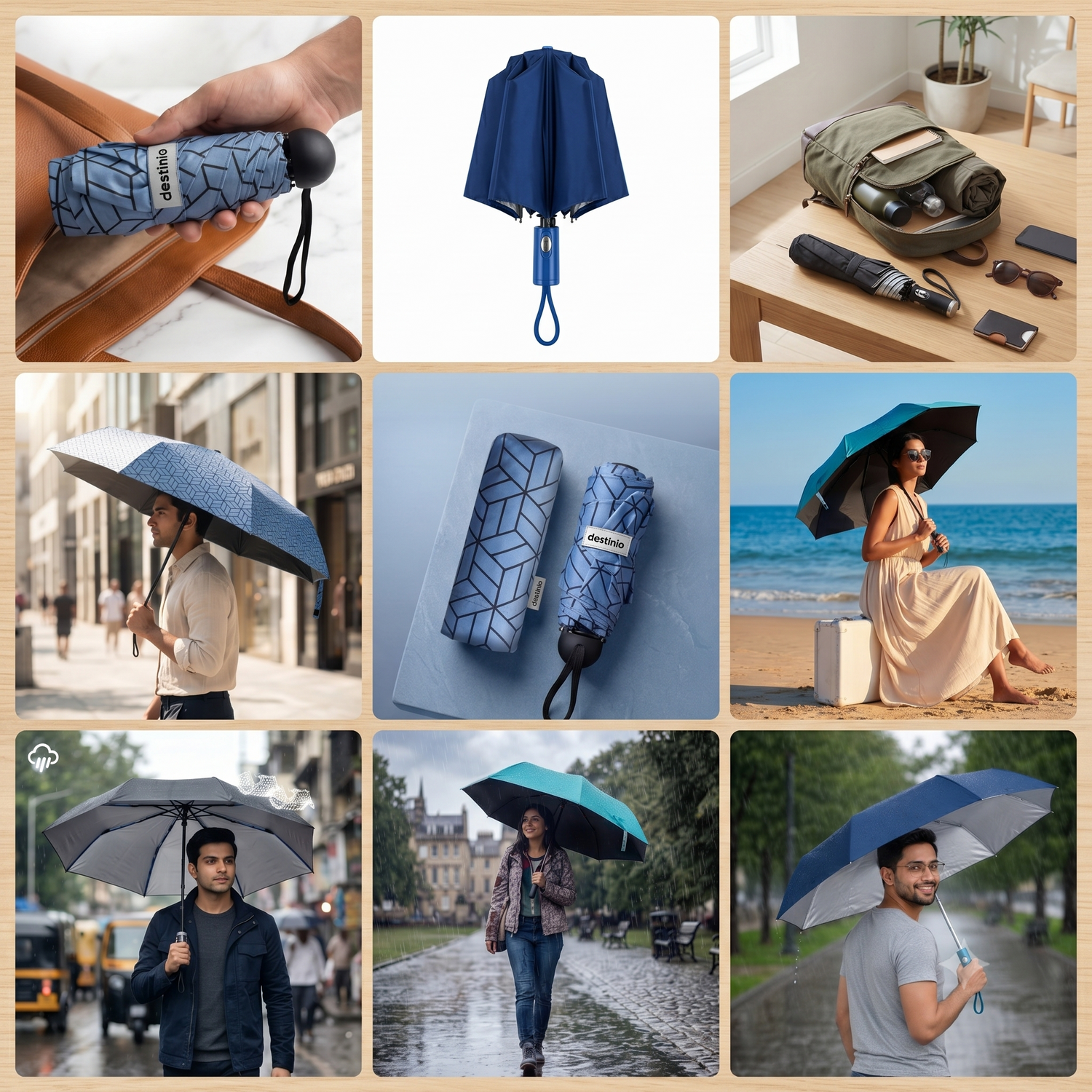
A well-made fiberglass-rib umbrella — like these compact windproof options available online — costs a little more but lasts multiple monsoon seasons instead of one.
Auto Open-Close: The Feature That Changes Everything
Manual umbrellas require two hands and several seconds to open — at exactly the moment when rain suddenly starts and you're juggling a phone, bag, and the rest of your life. A single-button auto open-close mechanism means the umbrella is deployed before the first drops have soaked your shoulders. Once you've used an auto-open umbrella through a monsoon season, you will never go back to manual.
UV Coating: Not Just for Looks
Most people associate UV-coated umbrellas with summer sun protection, but the coating also makes the fabric more water-repellent and keeps it cooler to hold. A UPF 50+ umbrella doubles as effective sun protection during India's brutal April-May summer, meaning you get year-round use from a single purchase rather than a dedicated monsoon umbrella that sits unused for eight months of the year.
Compact vs. Full-Size: The Daily Carry Trade-Off
A 3-fold compact umbrella (typically 21 inches, folding down to about 25 cm) fits in a handbag, laptop bag, or even a large jacket pocket. This means you'll actually carry it every day — which is the point. The trade-off is slightly less canopy coverage than a full-size umbrella. For the majority of daily commuters, the compact wins because the best umbrella is the one you have with you when the rain hits.
If you want a compact that doesn't sacrifice too much on coverage or windproofing, this range of 3-fold automatic umbrellas covers most needs from everyday urban commutes to weekend travel.
Kids' Umbrellas: Safety First
Children's umbrellas need to meet a different checklist than adult ones. The number one priority is safety: rounded rib tips, smooth canopy edges, and a pinch-proof mechanism that won't catch small fingers during opening and closing. After that, the handle should be ergonomic for small hands — a J-type curved handle is far better than a straight handle for kids. Finally, it needs to be genuinely windproof (8 fiberglass ribs minimum) because children tend to use umbrellas in ways no engineer intended.

How to Choose the Right Raincoat for Indian Conditions
The Three Types of Rain Protection Outerwear
Understanding which type of raincoat suits your situation is the starting point:
- Rain jacket + trousers set: A full jacket-and-pant suit is the most comprehensive protection. It keeps the entire body dry, making it ideal for bike riders, outdoor workers, and people spending extended time outdoors in heavy rain. Look for double-layer construction, sealed or waterproof zippers, and taped seams — these are the details that separate a genuine raincoat from a coated jacket that soaks through after an hour.
- Poncho: A poncho is a single large piece of waterproof fabric with a hood and arm openings. Its advantage is that it covers both you and your bag in one piece — extremely practical for trekkers and bikers who need to protect a large backpack. The best ponchos are made from thick PVC or TPU, are knee-length for full coverage, and can be stuffed into a small pouch when not in use. Reusable waterproof ponchos designed for travel and biking are a very compact option worth keeping in your bag during monsoon months.
- Waterproof jacket (no trousers): A standalone waterproof jacket is useful in lighter rain or for situations where you're mostly seated (in a cab, office, restaurant) but need something to dash between them. It's less suited to true downpours or bike riding where your lower half is fully exposed.
Material: What Actually Keeps You Dry
The material specification matters more than the brand name or the look. Key things to check:
- Polyester with PU coating: The most common and cost-effective waterproof material. Works well for light to moderate rain. Quality varies significantly — thicker polyester (150D or above) with a proper PU coating will outlast thinner fabrics significantly.
- PVC: Heavier and less breathable than polyester, but extremely waterproof and durable. Common in ponchos and budget rain suits. Good choice for bike riders who need maximum protection and don't mind a slightly heavier garment.
- Seam construction: A waterproof fabric with open (unsealed) seams will leak at every stitch line. Look for taped or sealed seams on any raincoat you intend to use in genuine heavy rain.
For Bike Riders: The Non-Negotiables
Riding a motorcycle or scooter through Indian monsoon rain is one of the most demanding scenarios for rain gear. Your raincoat needs to stay sealed at speed, in wind, across bumps. A double-layer jacket with a proper waterproof outer shell and an inner mesh lining for breathability is far more practical than a single-layer coated jacket. Premium zippers (YKK or equivalent waterproof zippers) and a hood that fits under a helmet without bunching are the practical details that matter. Jacket and trouser rain suit sets built specifically for bike riding solve most of these problems in a single purchase.

Monsoon Rain Gear: A Practical Checklist
Before the first June showers arrive, run through this list:
- Daily commute umbrella: Auto open-close, fiberglass ribs, 21–23 inch canopy, compact enough to live permanently in your bag. Replace it if last year's ribs are bent or the fabric is pilling.
- Car/desk backup umbrella: A full-size or golf umbrella kept at your workplace or in your car for the genuinely heavy days when a compact umbrella isn't enough coverage.
- Kids' umbrella: Pinch-proof mechanism, fiberglass ribs, ergonomic handle. Replace every 1–2 seasons — children's umbrellas take significant abuse.
- Bike raincoat or poncho: If you ride a two-wheeler at all during monsoon, a proper rain suit or poncho is non-negotiable. One soaking ride in work clothes is enough to make the investment worthwhile.
- Travel poncho: For trekkers and outdoor travellers, a compact packable poncho that fits in a 200ml pouch. Takes almost no space in a bag and covers you and your backpack completely.
Common Mistakes When Buying Monsoon Rain Gear
Buying on looks rather than specs. A stylish umbrella with steel ribs will fail in the first serious wind. Check the rib material and count — 8 or 10 fiberglass ribs is the standard to look for in a windproof umbrella.
Getting a raincoat that's too small. You wear a raincoat over your regular clothes. Size up by at least one size from your usual fit, more if you plan to layer underneath during cooler monsoon evenings in hilly areas.
Ignoring packability. A bulky rain jacket you leave at home because it won't fit in your bag provides zero protection. Prioritise rain gear that packs small enough to travel with you — compact umbrellas that fit in a handbag and ponchos that compress to fist-size are the options that will actually get used.
Not testing before the season. Check your umbrella's auto-open mechanism and your raincoat's zipper before the first shower of the year. A jammed zipper or a stuck button at the wrong moment is entirely avoidable.

The Bottom Line
The right monsoon rain gear is not expensive — it's just specific. An auto-open windproof compact umbrella with fiberglass ribs for daily carry, a larger backup for heavy days, a proper rain suit or poncho for bike riding or trekking, and a safe kids' umbrella if you have children. That covers virtually every Indian monsoon scenario.
The window to sort this out before the season hits is short. Once June arrives and the first real showers come, every umbrella shop in the country runs out of stock within days. Getting prepared in late May — even just having your rain gear checked and replaced where needed — means you're ready rather than scrambling.
For a well-stocked range covering everything from compact everyday umbrellas to windproof fiberglass-rib designs and kids' models, browse the full umbrella range here. For monsoon raincoats including bike rider rain suits and packable travel ponchos, see the raincoat collection here.
Stay dry. Travel smart.

Leave a comment
This site is protected by hCaptcha and the hCaptcha Privacy Policy and Terms of Service apply.