
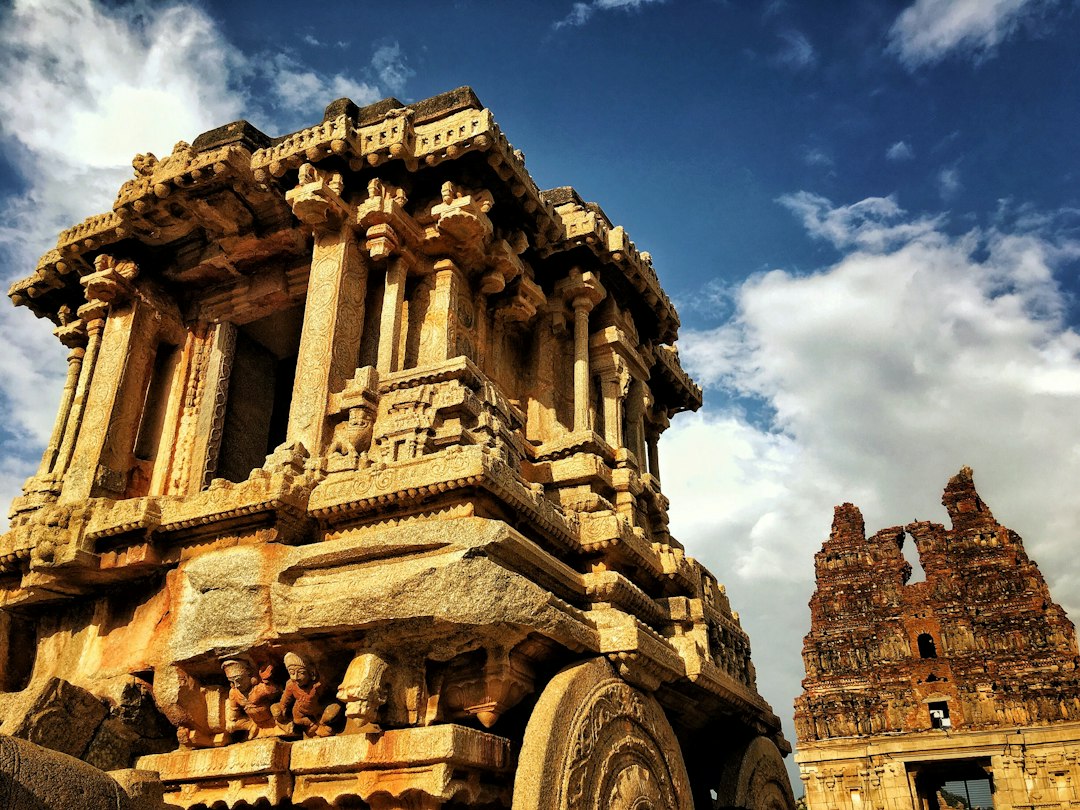
At 5.47 a.m., Hampi is a landscape of whispers. The road is empty, the shops are still shuttered, and the Virupaksha temple bell has not yet announced the day. Then the eastern sky turns rose-gold behind a ridge of enormous granite boulders, and the scattered ruins begin to glow. This is when Hampi feels less like an archaeological site and more like an ancient city caught in the act of waking up.
Most visitors arrive with a list: Vittala Temple, the stone chariot, Virupaksha Temple, the royal enclosure and perhaps a boat ride across the Tungabhadra. Those places deserve their fame, but Hampi’s deeper charm lies in what happens between them. Wandering beyond the main paths reveals pillared remains, almost-hidden stepwells, weathered sculptures and everyday life continuing beside a spectacular 9th-century ruin.
Following the Light Through the Vijayanagara Landscape
Begin near the Kamalapura Bazaar, where the streets are broad and the morning light creates long shadows across the stones. From here, walk south through the old market quarter toward the temple complex. Hampi was once the capital of the Vijayanagara Empire, and its scale becomes clearer when you notice the carefully carved pillars, royal gateways and drainage channels built into a landscape now softened by grass and scrub.
The silence is one of the strangest pleasures. Cicadas pulse from the boulders, a caretaker sweeps fallen leaves from a temple entrance, and distant voices carry from a village kitchen. At the small shrine of the Tulasi Brindavana, the fragrance of jasmine hangs in the air as devotees offer flowers and oil lamps. It is a reminder that Hampi is not frozen in history; it remains a living sacred landscape.
Continue to the massive gopuram of Virupaksha Temple, where the climb begins. Inside, the central shrine is dim and cool, and shafts of sunlight cut through narrow openings. Outside, the view from the upper gallery is almost overwhelming: domes, towers and collapsed walls spread toward the river, surrounded by hills crowned with clouds. Stand here long enough and the outlines of the former city start to reassemble themselves in your imagination.
After the temple, descend into the Tungabhadra riverside area. Coracle boats wait near the bank, their bright circular forms almost looking like giant leaves. A short ride across the water offers a different perspective of the ruins, with Hampi’s temples and boulders reflected in the slow-moving river. If the boatman has time, ask him to point out the wider stretch of the river associated with the Ramayana. In Hampi, geography itself becomes part of the legend.
By mid-morning, visit the Vittala Temple and its celebrated stone chariot, but do not stop there. Walk toward the less visited section where musicians once played beneath pillared halls. At the Pushkarani, a rectangular reservoir lies green with water lilies and bordered by old steps. The sound of birds and the cooler air make it easy to imagine crowds gathering here during the empire’s grand festivals.
Finish with a simple South Indian breakfast at a local eatery near Virupaksha. Idli, crisp dosa and filter coffee arrive without ceremony, served on metal plates beside the road. The flavors are bright, the portions are generous, and the first busy sounds of the day have finally begun. Hampi’s magic is not only in its monumental ruins but in this contrast: absolute stillness at dawn, then the warmth of food, conversation and ordinary life.
Stay for two days if you can. Use the first morning for the temples and the second for the quieter paths around Zanana Lake, the Anjanadri Hill area and the villages beyond the core. Wear shoes with good grip, carry water, and begin early. The reward is not simply seeing Hampi in good light; it is watching a place of extraordinary history come alive, stone by stone, as the sun rises.

Leave a comment
This site is protected by hCaptcha and the hCaptcha Privacy Policy and Terms of Service apply.